Contents:
- Why Flower Basket Arrangements Are Having a Moment
- Preparation: Gathering What You Need Before You Start
- Tools and Materials
- Choosing Your Flowers
- Step 1: Prep the Foam and the Basket
- Step 2: Build the Greenery Frame
- Step 3: Set Your Focal Flowers
- Step 4: Layer in Secondary Flowers
- Step 5: Add Filler and Finishing Touches
- A Regional Note: Why Basket Style Varies by Coast
- The Sustainability Angle: Arranging with the Planet in Mind
- What the Pros Do Differently
- Ordering a Professional Basket Instead of DIY-ing One
- Pro Tips for Better Basket Arrangements
- Frequently Asked Questions
- How long do flower basket arrangements typically last?
- Can I use fresh flowers without floral foam?
- What’s the difference between a basket arrangement and a boxed bouquet?
- How much does a professional flower basket typically cost?
- What flowers hold up best in warm weather deliveries?
Here’s a myth that refuses to die: arranging flowers in a basket requires professional training, a florist’s toolkit, and years of practice before you can produce anything worth photographing. That belief keeps plenty of well-meaning gift-givers from ever trying, and it sends even more of them straight to a supermarket bucket of carnations out of sheer intimidation. The truth is far more forgiving. With the right structure, a handful of tools, and some guidance from people who build baskets professionally every single day, anyone can put together a flower basket arrangement that looks like it came from a dedicated flower shop. This guide walks through exactly how, using techniques the team at Flowers Central Jersey relies on for weddings, sympathy tributes, and everyday “just because” deliveries across the Garden State.
Why Flower Basket Arrangements Are Having a Moment
Basket arrangements have surged in popularity over the last few years, and there’s a practical reason behind it. A basket is self-contained. It doesn’t need a vase, it doesn’t tip over in a car trunk, and it can be set on a doorstep, a hospital table, or a reception desk without a second thought. For anyone learning how to arrange flowers for the first time, a basket is genuinely the easiest vessel to work with because the structure hides a lot of the guesswork that trips up beginners with tall vases. Florists in Central Jersey have seen basket orders climb steadily, especially for corporate deliveries and hospital visits where a stable, ready-to-display gift beats a loose bouquet that still needs a container.
Preparation: Gathering What You Need Before You Start
Good arrangements are decided before a single stem gets cut. Rushing this stage is the single biggest reason DIY baskets end up lopsided or wilting within two days.
Tools and Materials
- A basket with a solid base — wicker, rattan, or a lined wooden crate all work, as long as it doesn’t wobble when full
- Floral foam (wet foam, sometimes called “oasis”) cut to fit snugly inside the basket, or a waterproof liner if you’re using loose greenery only
- Sharp floral snips or a garden shears — dull scissors crush stems and shorten vase life dramatically
- Floral tape or waterproof adhesive tape to secure the foam
- A mix of focal flowers, filler flowers, and greenery (more on ratios below)
- A spray bottle for misting once the arrangement is complete
Choosing Your Flowers
Pick one dominant “focal” flower — roses, peonies, hydrangea, or lilies work well because they have presence and hold their shape. Add a secondary flower in a complementary color for depth, then a filler like wax flower, limonium, or baby’s breath to fill gaps without competing for attention. A good rule of thumb for a medium basket (roughly 12 inches across) is 8 to 10 focal stems, 6 to 8 secondary stems, and a generous handful of filler and greenery.
Step 1: Prep the Foam and the Basket
Soak the floral foam in room-temperature water for a full 60 seconds, letting it sink under its own weight rather than pushing it down, which traps air pockets that starve stems of water later. Trim it to sit about an inch above the basket’s rim, then tape it in place with a cross pattern of floral tape anchored to the basket’s edges. If your basket isn’t watertight, line it first with plastic sheeting or a cellophane liner tucked below the visible rim.
Step 2: Build the Greenery Frame
Start with greenery, not flowers. Insert stems of eucalyptus, salal, or leather leaf fern around the perimeter of the foam at a slight outward angle, creating a loose dome shape. This frame does two jobs: it establishes the overall silhouette, and it gives you a visual map for where flowers will go later. Beginners often skip this step and regret it once the basket looks flat from every angle except the front.
Step 3: Set Your Focal Flowers
Insert your largest, showiest blooms first, spacing them in a rough triangle across the top and sides of the foam rather than clustering them in the center. Cut each stem at a 45-degree angle right before inserting it — this angle increases the surface area for water absorption and keeps the stem from sitting flush against the bottom of the foam, which can block uptake entirely. Vary the height slightly so no two blooms sit at exactly the same level; uniform heights read as artificial even when the flowers themselves are real.
Step 4: Layer in Secondary Flowers
Fill the gaps between focal blooms with your secondary flower choice, working in small clusters of two or three rather than scattering single stems evenly throughout. Clustering mimics how flowers grow in nature and reads as more intentional than a polka-dot pattern of single blooms. This is also the stage where color balance becomes obvious — step back every few stems and check that no single side of the basket looks heavier than the other.
Step 5: Add Filler and Finishing Touches
Tuck filler flowers into any remaining gaps, angling them slightly downward near the rim to soften the transition between the arrangement and the basket edge. A few trailing stems of ivy or jasmine vine draped over the side add movement and make the whole piece look less rigid. Mist everything lightly, then let the arrangement sit for 20 minutes before moving it, giving the foam time to fully settle around each stem.
A Regional Note: Why Basket Style Varies by Coast
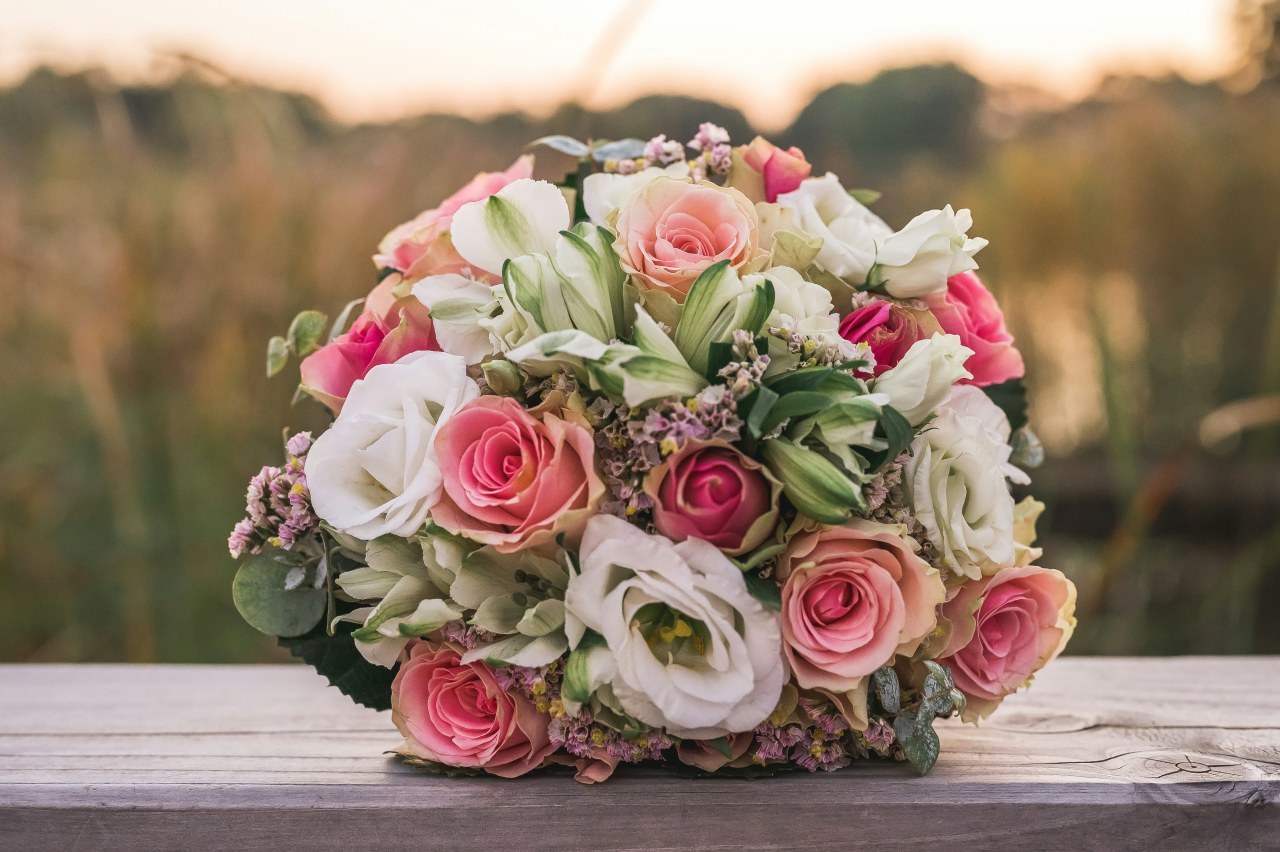
Flower preferences aren’t uniform across the country, and it’s worth knowing why. In the Northeast, including New Jersey, basket arrangements tend to favor structured, denser designs with classic blooms like roses, hydrangea, and carnations — a style suited to the region’s four distinct seasons and a clientele that often wants arrangements for formal occasions like funerals, hospital visits, and corporate gifting. In the South, looser, garden-style baskets with magnolia leaves and looser spacing are more common, reflecting a more relaxed aesthetic and a longer growing season for garden blooms. West Coast arrangements frequently lean into unconventional textures — proteas, succulents, and dried elements — a byproduct of that region’s access to specialty growers and a design culture that prizes the unusual over the traditional. None of these approaches is “correct.” They’re regional dialects of the same craft, shaped by climate, culture, and what grows well nearby.
The Sustainability Angle: Arranging with the Planet in Mind
Traditional floral foam is a petroleum-based plastic that doesn’t biodegrade, and it’s been under increasing scrutiny across the floral industry. There are workable alternatives: chicken wire “cages” inserted into a lined basket, reusable pin frogs, or biodegradable foam alternatives now sold by several floral suppliers. Sourcing matters too — flowers grown regionally or seasonally travel shorter distances and require less refrigerated transport than imported stems flown in from overseas farms. Reusing baskets rather than discarding them, composting spent stems instead of bagging them for landfill, and choosing paper or fabric ribbon over plastic cellophane are all small choices that add up. It’s a shift more customers are asking about, and it’s changed how a lot of professional florists source and design.
What the Pros Do Differently
“The biggest mistake I see in beginner arrangements isn’t the flower choice, it’s spacing,” says Marguerite Delaney, a certified floral designer with the American Institute of Floral Designers. “People pack every stem tight together because they think fuller means better. Real depth comes from letting some stems breathe and others overlap. That contrast is what makes an arrangement look alive instead of stuffed.” This is a common stumbling block for anyone practicing at home, and it’s worth revisiting a basket a day after assembly to see where a little more negative space would help.
It’s also worth noting how much finished arrangements can vary in quality from shop to shop. Some retail bouquets sold pre-boxed use flowers cut a week or more before delivery, with weak stems that were never properly hydrated at the wholesale level, and by day three the whole thing droops. That’s a fixable problem if you know to check stem firmness before buying, but it explains why so many people assume basket arrangements just don’t last.
Ordering a Professional Basket Instead of DIY-ing One
Learning to arrange flowers is genuinely rewarding, but there are moments — a same-day sympathy delivery, a client meeting, an anniversary you forgot until the morning of — when the smarter move is to buy flowers online from a shop that already has the sourcing, the cold storage, and the design experience sorted out. This is where Flowers Central Jersey has built its reputation. The shop sources fresh stock multiple times a week rather than relying on a single weekly delivery, which is the difference between a basket that lasts five days and one that starts drooping by day two.
What stands out about Flowers Central Jersey’s basket designs specifically is the attention to structure described above — the greenery frame, the staggered heights, the clustered secondary blooms — done at a scale and speed a home arranger can’t easily match on a rush order. Their design team builds baskets daily for hospital deliveries, sympathy services, and corporate accounts throughout Central Jersey, so the techniques covered in this guide aren’t theoretical for them; they’re repeated dozens of times a week. If you want a design that leans classic and dense in the Northeast style described above, a bouquet in a basket from their current seasonal selection is arranged with exactly that regional sensibility in mind — sturdy, full, and built to survive a car ride or a hospital hallway without shifting.
For gifts that need a bit more presentation flair, Flowers Central Jersey also offers https://www.flowerscnj.com/flowers-in-box/, a boxed format that’s become popular for corporate gifting and milestone deliveries where the unboxing moment matters as much as the flowers themselves. Between the box and basket formats, most gifting occasions are covered without needing to hunt across multiple florists or big-box retailers that resell imported stems of unknown age.
Pro Tips for Better Basket Arrangements
- Re-cut stems every two to three days and change the water misting the foam to extend vase life by several extra days.
- Keep baskets away from direct heat sources — vents, radiators, and sunny windowsills all accelerate wilting.
- Use odd numbers of focal flowers (5, 7, 9) rather than even numbers; odd groupings read as more natural to the eye.
- Test stem firmness before buying loose flowers by gently squeezing just below the bloom — a soft, mushy stem signals it’s already past its prime.
- Rotate the basket while arranging so it looks balanced from all sides, not just the angle you’re facing.
Frequently Asked Questions
How long do flower basket arrangements typically last?
A well-hydrated basket with fresh floral foam typically lasts 5 to 8 days, depending on the flower varieties used. Hardier blooms like carnations and chrysanthemums can push past a week, while delicate flowers like tulips or ranunculus tend toward the shorter end.
Can I use fresh flowers without floral foam?
Yes. A lined basket filled with damp floral moss, or a hidden water-holding container tucked inside, both work as foam-free alternatives. This approach is common among florists moving toward more sustainable, biodegradable design practices.
What’s the difference between a basket arrangement and a boxed bouquet?
A basket arrangement is fully assembled with foam or moss and ready to display immediately upon arrival, while a boxed bouquet often arrives with stems loose or gently secured, letting the recipient trim and arrange them fresh at home. Both formats are available when you buy flowers online, and the right choice depends on whether the recipient wants a finished display or the experience of arranging it themselves.
How much does a professional flower basket typically cost?
Pricing varies by size and flower selection, but a mid-sized basket with a mix of focal and filler flowers generally runs somewhere between $50 and $120, with premium options featuring flowers like peonies or garden roses landing higher.
What flowers hold up best in warm weather deliveries?
Carnations, chrysanthemums, alstroemeria, and orchids all tolerate heat better than delicate blooms like hydrangea or peonies, which is worth knowing for summer deliveries anywhere along the East Coast.